Why Is My Pool Green? Common Causes and How to Fix It
A pool usually turns green because algae have grown faster than the sanitizer can control them. Low available chlorine, poor circulation, and a dirty filter can contribute. But green water is not always algae: dissolved metals, especially copper, can also create a green tint. Test the water before adding more chemicals.
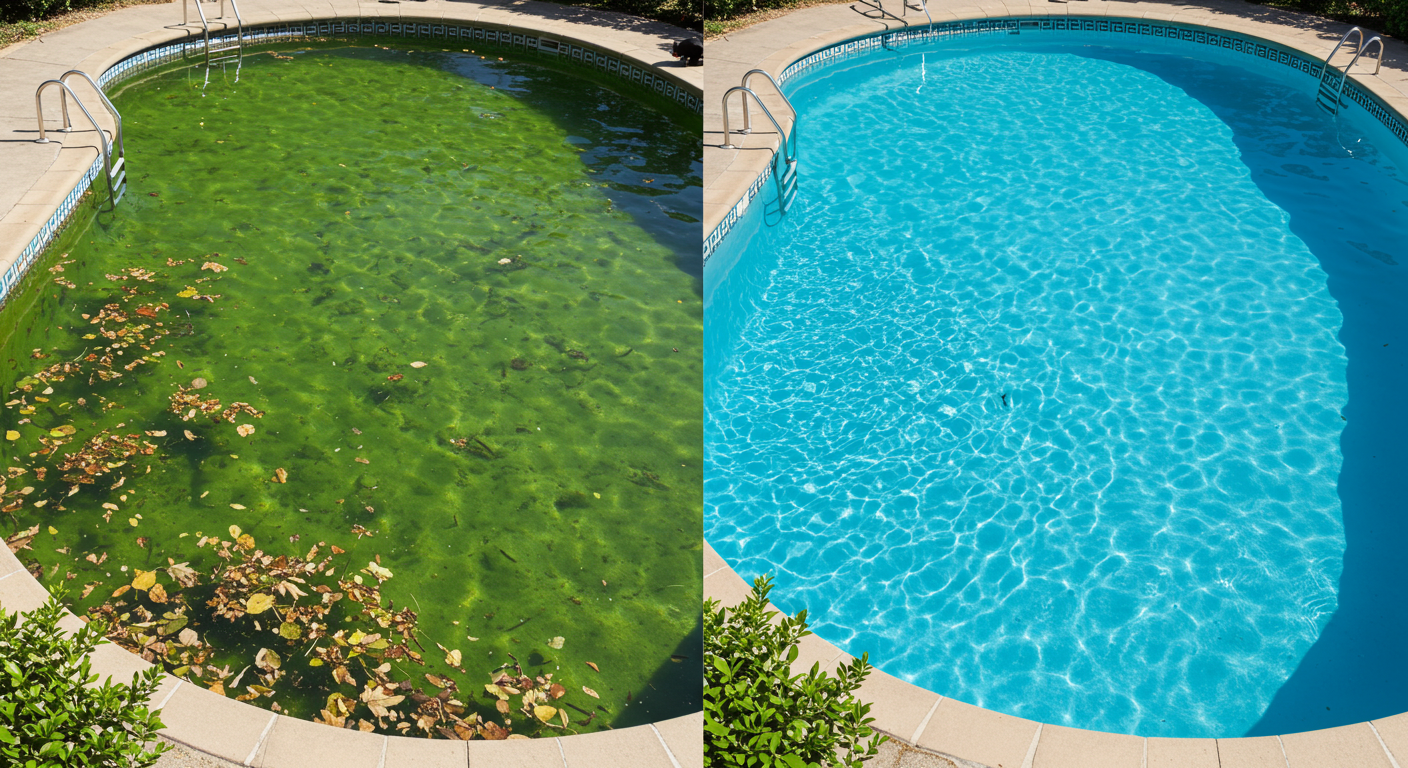
For homeowners in Chino and the surrounding Inland Empire, the useful question is not simply “How much shock should I add?” It is “What allowed the water to turn green, and is the equipment working well enough to clear it?”
First, look at the water—not just its color
Cloudy green water or slippery green walls: algae are a likely cause. Check steps, corners, and behind ladders, where growth may start before the whole pool changes color.
Clear water with a green tint: investigate metals, especially if the color appeared after adding chlorine. Appearance alone cannot confirm copper; request a metals test.
A green-looking surface under otherwise clear water: staining or the finish itself may be involved. That calls for a different diagnosis from treating an algae bloom.
If you cannot clearly see the bottom, keep everyone out. Poor visibility makes it harder to spot a swimmer in trouble.
Common reasons a pool turns green
1. Chlorine is too low—or not effective enough for the conditions
A pool needs a maintained sanitizer residual, not just an occasional chemical addition. Sunlight, swimmers, and organic debris can use up chlorine between checks. A reading taken immediately after treatment does not show whether the pool held that level afterward.
Ask for free chlorine, not just total chlorine. Free chlorine is the portion measured separately from combined chlorine. Also test cyanuric acid (CYA), the stabilizer that helps protect chlorine from sunlight. Too much stabilizer slows chlorine’s action, so a chlorine number by itself does not tell the whole story.
2. Water is not circulating properly
A running pump does not automatically mean good flow. Full baskets, low water at the skimmer, an equipment fault, or an unsuitable pump schedule can leave parts of the pool poorly circulated. Check whether the returns have their usual flow and whether the pump is operating normally.
There is no single daily run time that fits every pool. Pump speed, plumbing, filter condition, pool size, and current cleanup needs all matter. If the pump is losing prime, running dry, or making unusual noises, stop and get the equipment checked.
3. The filter cannot keep up
Treatment and filtration do different jobs. Sanitizer addresses algae; the filter removes suspended material. A pool can lose its green color but remain cloudy while that material is being removed.
Compare filter pressure with its normal clean reading and follow the manufacturer’s cleaning guidance. Cartridge, sand, and DE filters require different procedures. Never open a pressurized filter: shut off the system and follow the equipment’s pressure-release instructions.
4. The chemistry or chlorine demand has changed
Check pH along with chlorine. High pH can reduce chlorine’s disinfecting effectiveness, while excessively low pH can damage equipment and surfaces. CDC’s residential guidance lists a pH range of 7.0–7.8; your treatment plan must also account for your equipment, finish, stabilizer, and product instructions.
Warm weather, strong sun, extra swimming, and debris can make a previously adequate routine fall short. During an Inland Empire hot spell or after a busy pool weekend, check the water more often instead of assuming last week’s schedule is still enough.
5. Nutrients and debris are contributing
Leaves, dirt, and other material add to the cleanup load. Phosphates can support algae growth, but a phosphate result alone does not diagnose a green pool. Phosphate remover is not a substitute for maintaining sanitizer, brushing, and restoring filtration. Start with the core water tests and equipment checks before buying another treatment.
Why is my pool green even though it has chlorine?
Several situations can explain it: the test measured total rather than free chlorine; CYA is elevated; the reading rose only after a recent dose; circulation is poor; or metals are causing the color. An established bloom also takes treatment and physical cleanup—not simply one normal chlorine reading.
Testing has limits, too. CDC notes that chlorine above 10 ppm can bleach some DPD tests and produce a falsely low reading. Follow your kit’s instructions and use a test suited to the expected range. Do not keep adding chemicals based on a questionable result.
How to start fixing a green swimming pool
Pause swimming and record what happened. Note recent chemical additions, heavy use, pump changes, and when the color appeared. Keep product names available.
Get a complete water test. Check free and total chlorine, pH, CYA, total alkalinity, and calcium hardness. Add a metals test if the water is clear green or changed color after chlorination.
Remove debris and check flow. Empty appropriate baskets safely, skim leaves, and inspect the pump and returns. Brush with a tool appropriate for your pool finish.
Choose treatment from the results. For confirmed algae, use a treatment appropriate for the pool volume, stabilizer level, and actual product concentration. Follow the label. Never mix chemicals or different chlorine products together.
Filter, clean, and retest. Follow the equipment’s operating guidance, monitor pressure, and vacuum or remove settled material as appropriate. Recheck chemistry during recovery; one dose may not complete the job.
Correct the recurring cause. Review sanitizer delivery, pump operation, filter condition, and the maintenance routine before returning to normal use.
Avoid draining the pool as an automatic first step. Water replacement may be part of a professional plan for certain chemistry problems, but draining introduces structural and surface risks and requires an appropriate discharge plan.
When to call a pool professional
Get help if the bottom is obscured, the pool repeatedly turns green, the pump or filter is not working properly, metals are suspected, or treatment is not producing a clear improvement. A useful diagnosis connects the test results with what the equipment is actually doing.
Explore our weekly pool service.
Green pool FAQs
Can you swim in a green pool?
Keep out until the cause is understood, visibility is clear, and water tests and treatment-label re-entry requirements are satisfied. Green color is not a reliable safety test, and unclear water creates a visibility hazard.
How long does it take to clear a green pool?
There is no reliable fixed deadline. A light bloom with functioning equipment may improve sooner than a heavily contaminated pool, while clearing the remaining cloudiness can take longer. Severe algae, high stabilizer, metals, or equipment problems can extend recovery over several days or longer.
Why did my pool turn green overnight?
The visible change can seem sudden even when sanitizer has been falling or algae have been developing for a while. Check recent swimmer load, debris, sanitizer delivery, and pump operation. A color change immediately after adding chemicals is also a reason to investigate metals.
Will shock fix a green pool?
It can be part of an algae treatment, but the word “shock” does not guarantee the right product or dose. Brushing, filtration, and follow-up testing still matter. More chlorine is not the answer to every metal-related color problem.
Why does my pool keep turning green?
Recurring green water suggests the underlying problem remains: inconsistent sanitizer, excess stabilizer, poor flow, an overloaded filter, or algae left in hard-to-reach areas. Review the whole routine rather than repeating the same chemical addition.
Still dealing with a green pool?
Superior Pool Pro helps homeowners in Chino and surrounding Inland Empire communities with green-pool cleanup, weekly maintenance, and pool equipment problems. Tell us when the color started, what you have added, and whether the pump is running normally.
Sources and further reading
CDC: Home pool water treatment and testing
Orenda: Understanding green pool water
Updated September 8, 2026.
